A Brief Introduction to Arne Jacobsen
Arne Jacobsen (1902–1971) was one of the greatest Danish architects and designers of his time, and his legacy continues to be celebrated worldwide. His work spans architecture, interior design, lighting, ceramics and textiles.
Jacobsen originally wanted to study art, but his father — a prosperous Jewish businessman — persuaded him to pursue architecture. He graduated in 1927 from the Royal Academy of Fine Arts in Copenhagen, where he would later teach. He became the most celebrated post-war designer and architect in Denmark, receiving numerous international awards and recognition throughout his career. Despite working actively as an architect and designer, art always remained a personal passion.
What made Jacobsen truly visionary was his ability to work in innovative formats and materials that were ahead of his time. His pieces have a bold aesthetic quality that is simultaneously simple and remarkably forward-thinking.
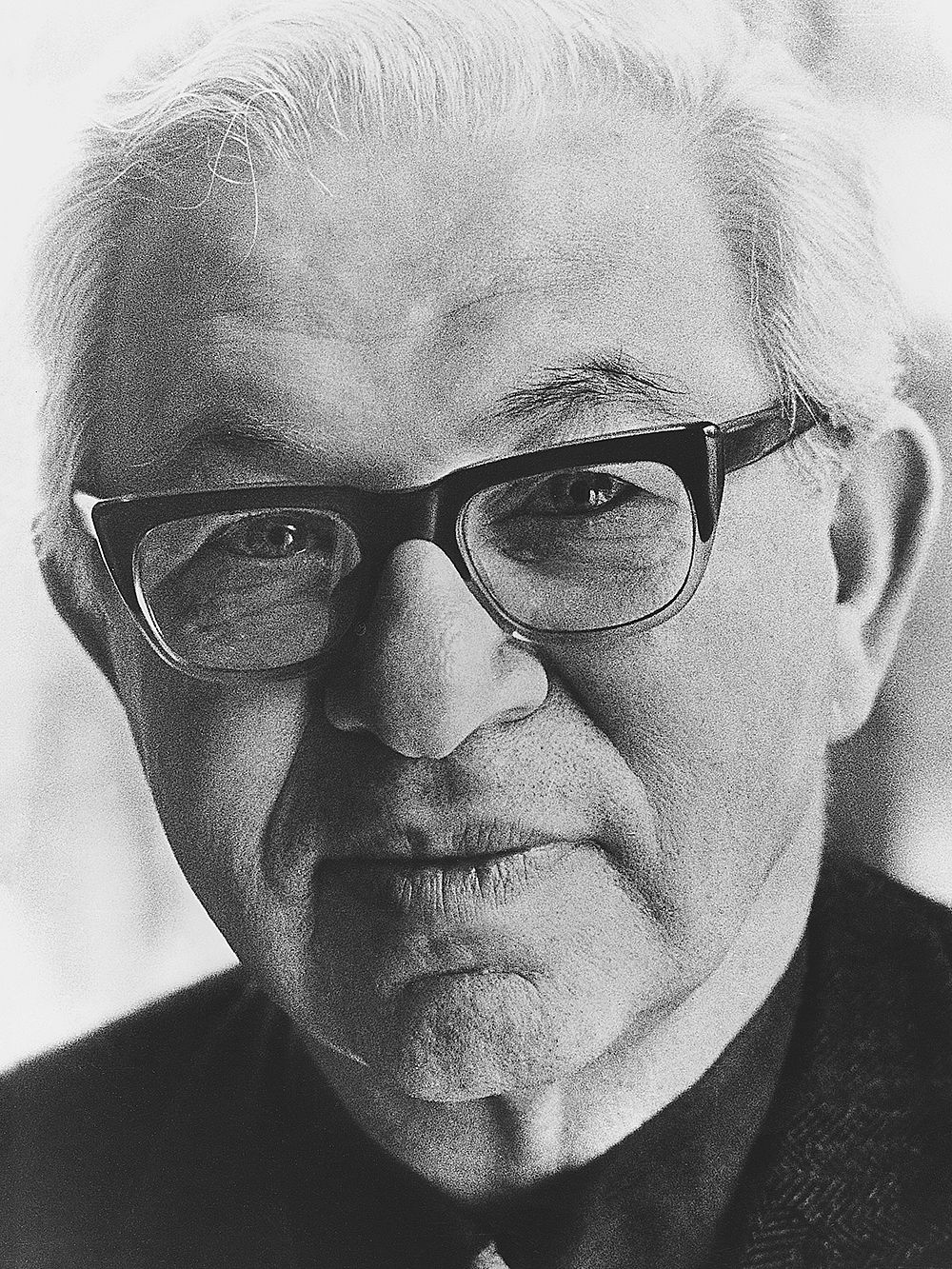
Arne Jacobsen was the master of Danish modernism and one of the most recognised architects and designers of the 20th century.
My Personal Connection to His Work
My closest encounter with Jacobsen’s work was during my time studying at the Royal Academy of Fine Arts in Copenhagen. I made a point of visiting the famous SAS Royal Hotel, now known as the Radisson Collection Hotel, which he designed and which opened in 1957. This project was a turning point in his career — it gave him international recognition. He designed every detail of that building: the textiles, lighting, cutlery and furniture. It was here that he could finally put his theory of integrated design and architecture into practice.
If you ever visit Copenhagen, I highly recommend going. Room 606 still preserves all of Jacobsen’s original interior design. You can book a visit without staying at the hotel — it’s like travelling back in time. Standing in that room, knowing everything around me had been there since 1957, was extraordinary.
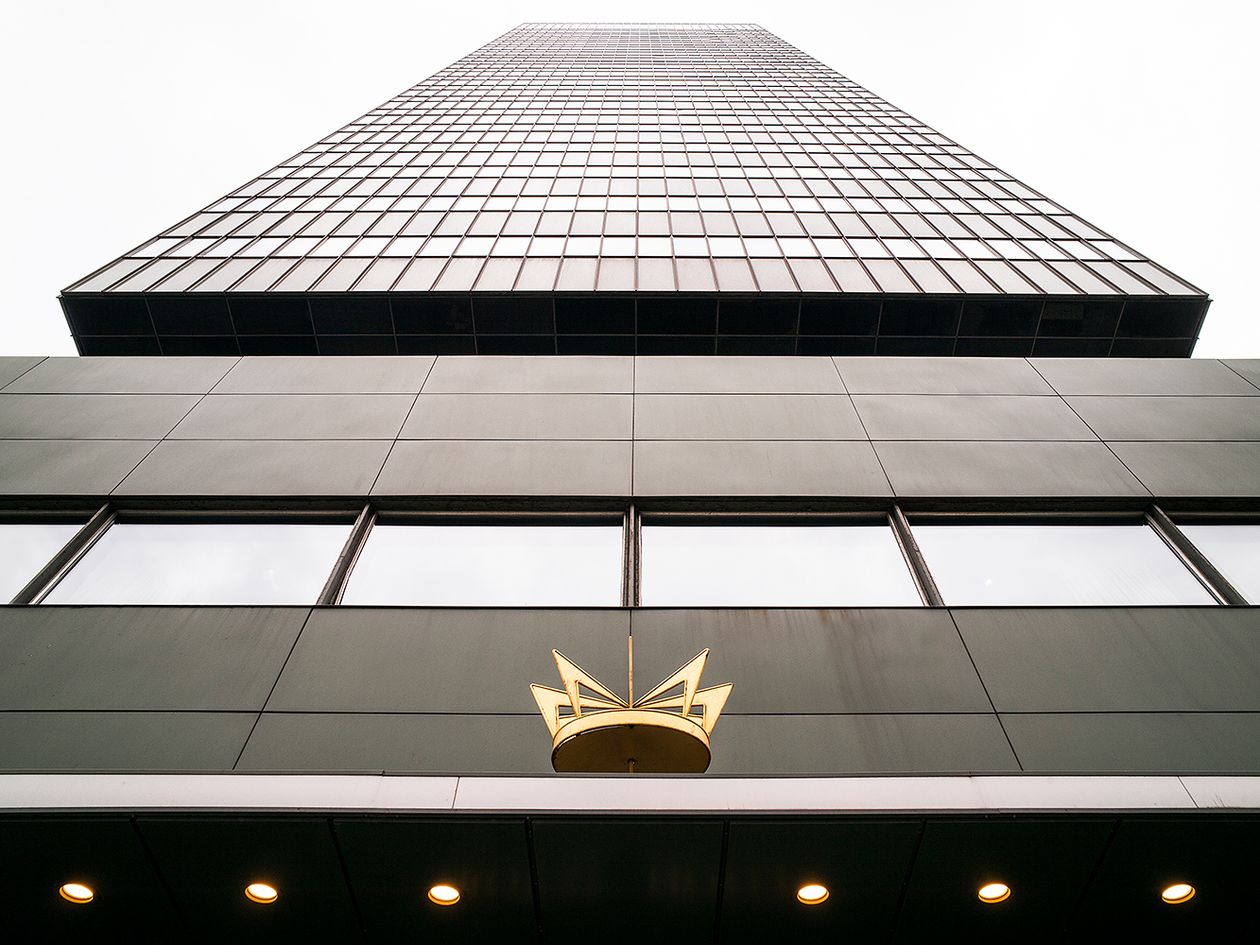
The SAS Royal Hotel in Copenhagen — the building facade
Iconic Pieces by Arne Jacobsen
Jacobsen’s designs are true icons of Danish design. They have been on the market for decades without losing their original character — timeless, persistent, and indifferent to passing trends.
AJ Lamps
The AJ Lamp collection, produced by Louis Poulsen, is a perfect example of elegant simplicity. Originally designed in 1957 for the SAS Royal Hotel, this iconic lamp is beloved by design enthusiasts worldwide. Today it also comes in an outdoor version.
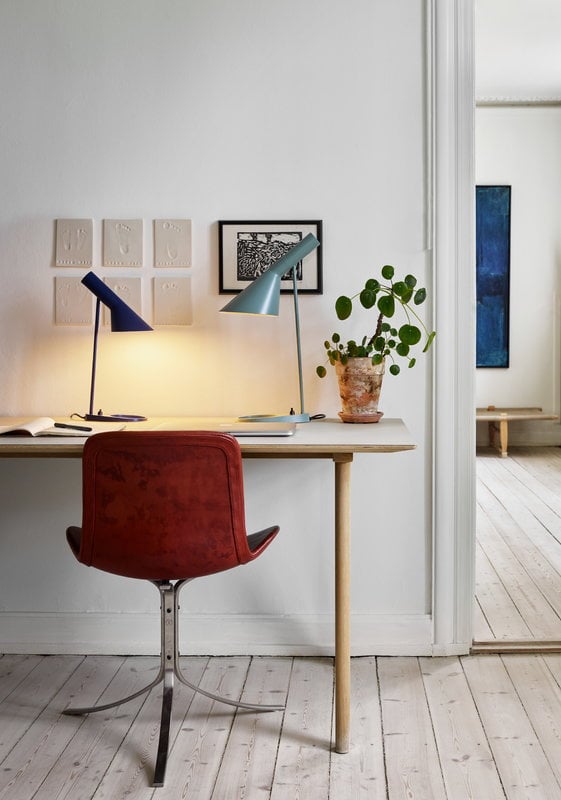
AJ Table Lamps by Louis Poulsen
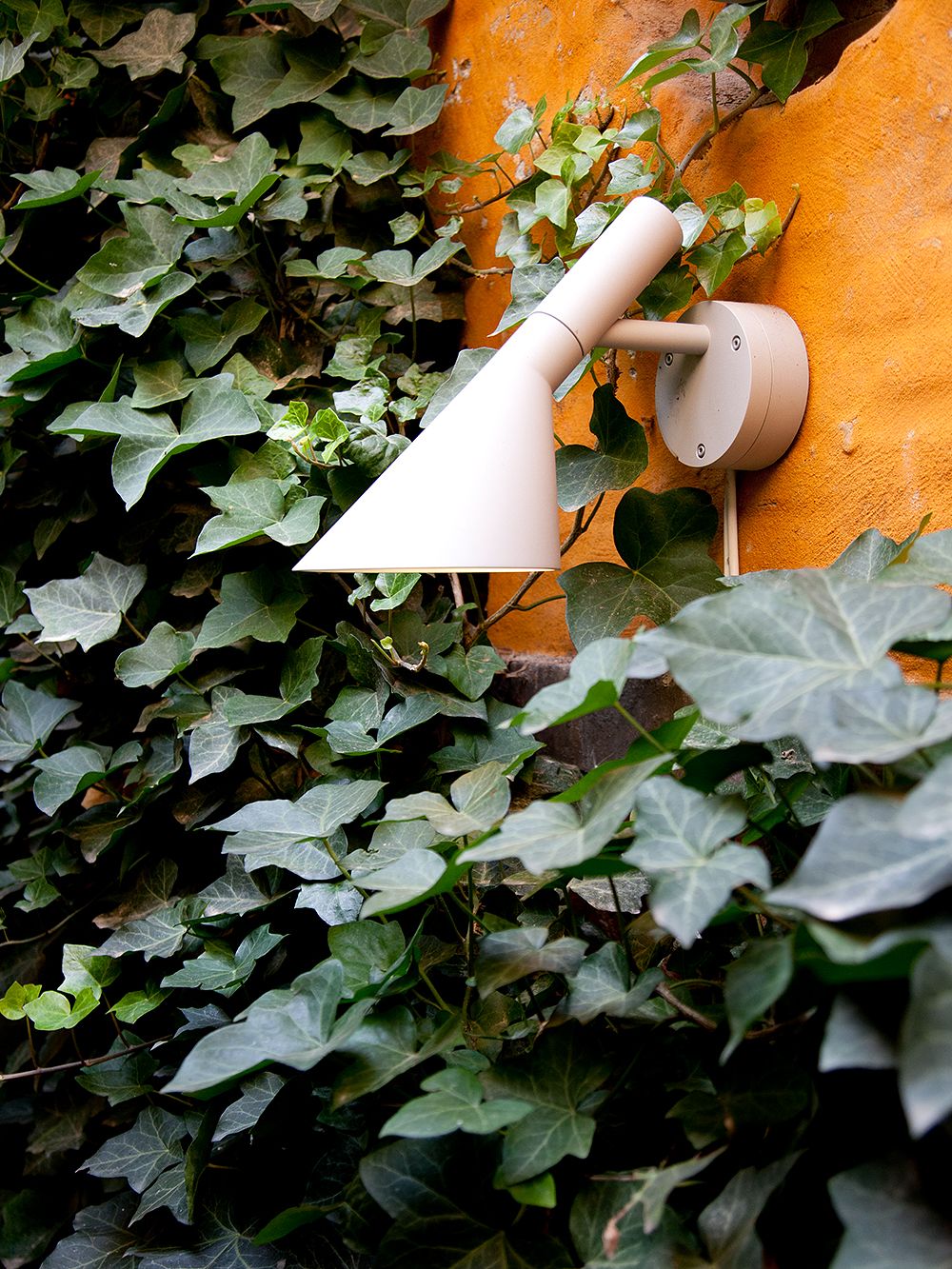
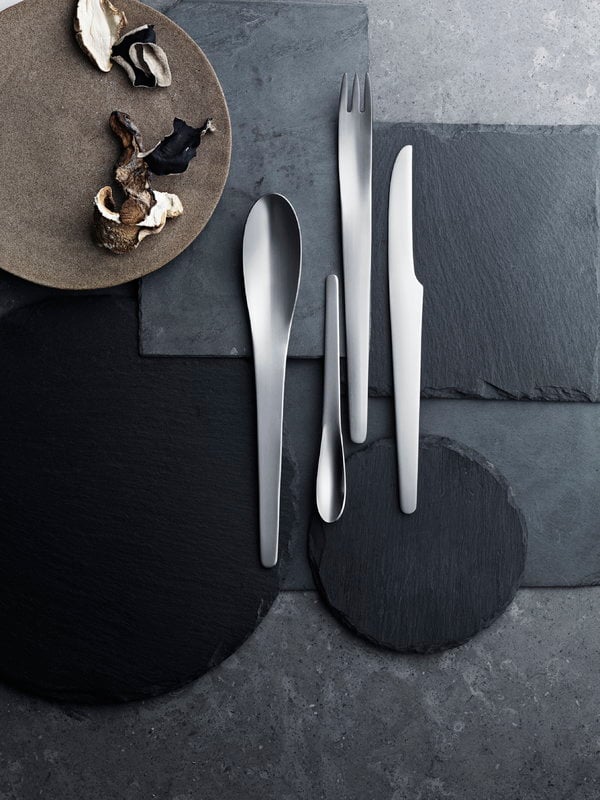
AJ Cutlery
The AJ Cutlery was produced by Georg Jensen for the SAS Royal Hotel. Modern, minimalist, and as relevant today as ever.
The ANT™ Chair
The Ant Chair™ (1952) was born from Jacobsen’s fascination with technological innovation. Created while working for Fritz Hansen — a relationship that began in 1934 — this chair would have broken under weight had it not used moulded laminated veneer, a technique that was genuinely pioneering at the time.

ANT™ Chair by Fritz Hansen
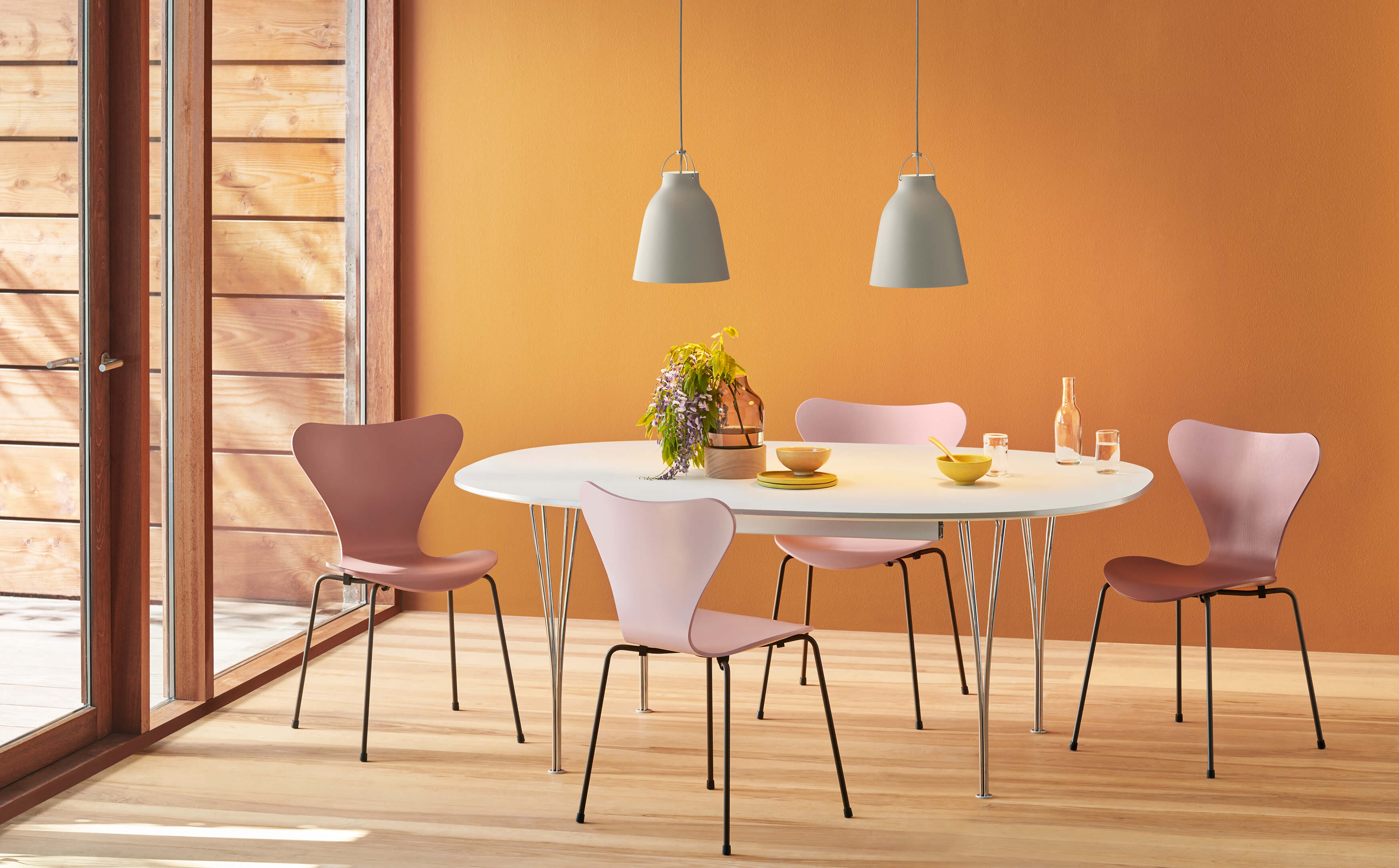
The Series 7™ Chair
Building on the moulded technique, Jacobsen created another bestseller in 1955 — the Series 7™. Even slimmer than the Ant, this chair remains to this day the Fritz Hansen Design House‘s best-selling piece of all time.
The DROP™ Chair
Designed for the SAS Royal Hotel, the Drop Chair was created to give a sense of embrace and freedom of movement. Re-launched in 2014, it is said to have been one of Jacobsen’s personal favourites.

The Egg™ Chair
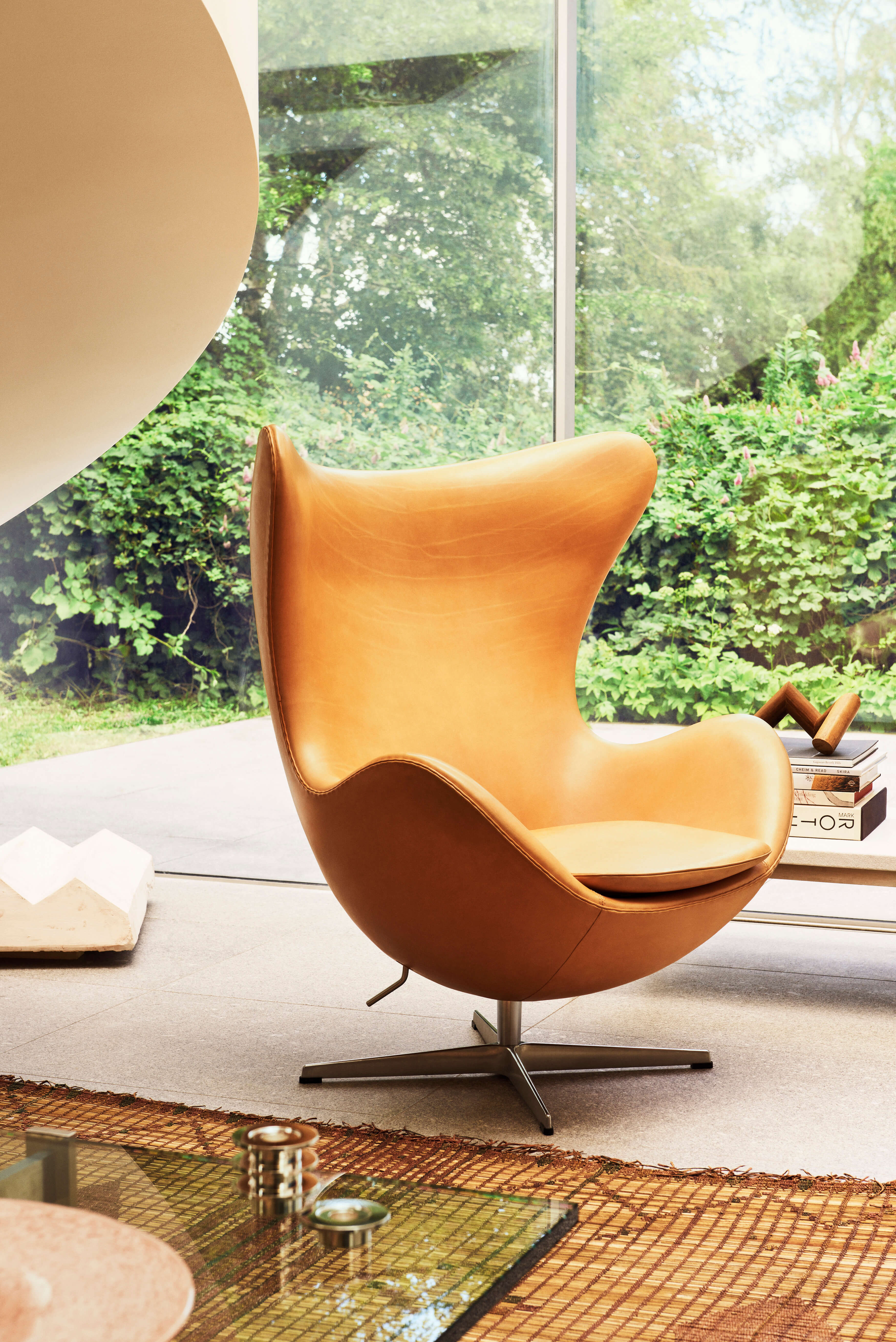
The Egg™ chair is Jacobsen’s masterpiece — a triumph of Danish design. He found its perfect form through experiments with wire and plaster in his garage. Today, the Egg™ is recognised worldwide as one of the greatest achievements of his legendary career and an enduring icon of Scandinavian design.
The Swan™ Chair
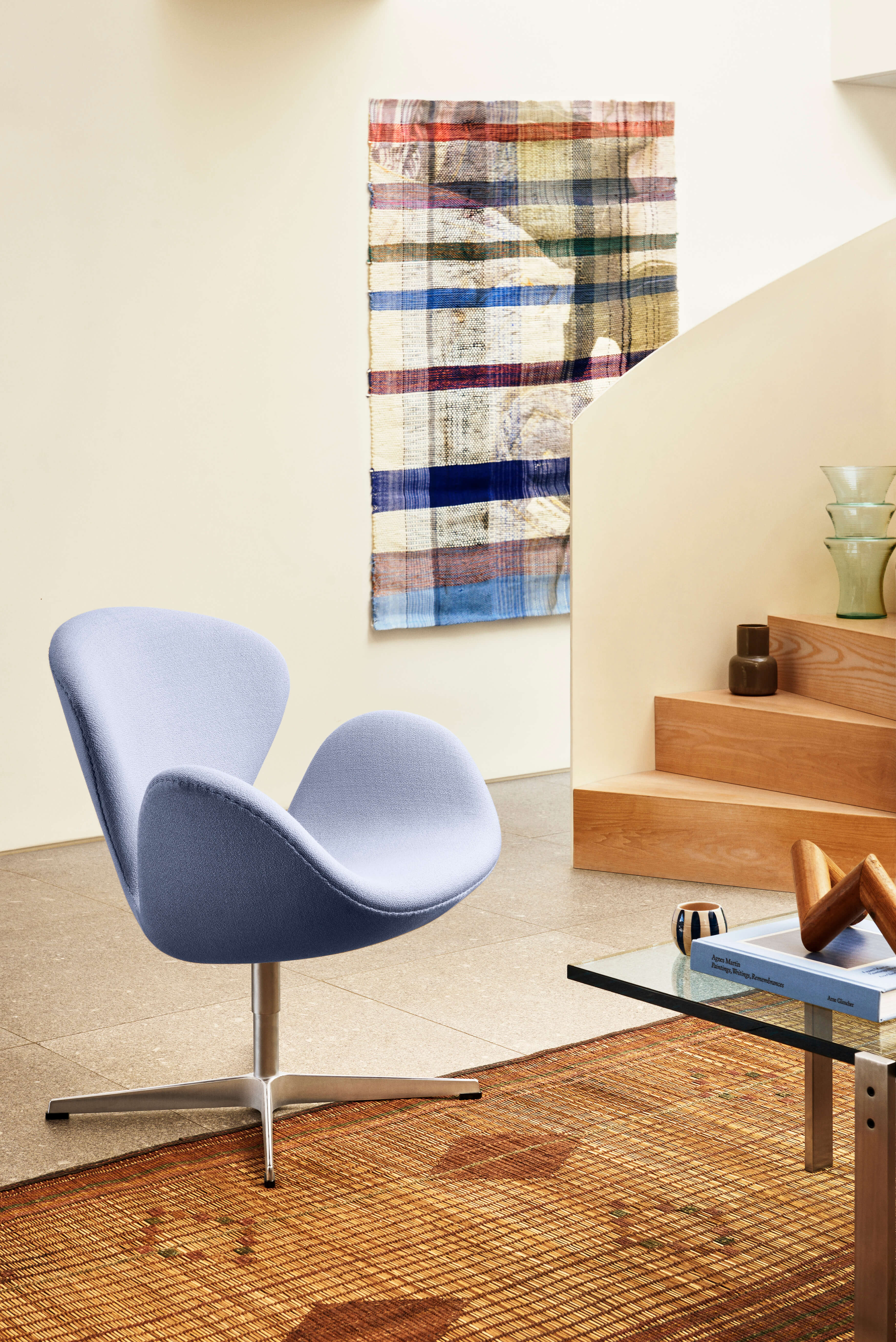
Designed in 1958 for the SAS Royal Hotel, the Swan™ does not have a single straight line — giving it an organic, soft quality of remarkable simplicity.
A Word on Authenticity
It is remarkable how many of Jacobsen’s pieces have endured as bestsellers, admired and purchased decade after decade. His mark on interior design — and architecture — is immense.
The brands linked throughout this post are the authorised producers and rights-holders for these original designs. Because of Jacobsen’s lasting impact, there are unfortunately many copies and replicas on the market, particularly online. Buying copies is not only illegal — it undermines the economy of the creative industry and fails to honour the designer’s legacy.
Buying one of these pieces should be treated as an investment. If you love a design, wait until you can acquire the real thing and give it the place of honour it deserves in your home.
Final Thoughts
If there is one thing I hope you take from this article, it is an appreciation for the importance of Jacobsen’s work — and the responsibility we all share in preserving his legacy.
Next time you consider a designer piece for your home, look into its origins: who created it, and who is authorised to produce it.
Did you already know Arne Jacobsen and his work? I’d love to hear your thoughts in the comments below.
Leave a Reply